Hugo
Siviili-insinööri Hugo Alexander Neuman (1847-1906) ja kumppanit perustivat Verlan ensimmäisen puuhiomon 1872.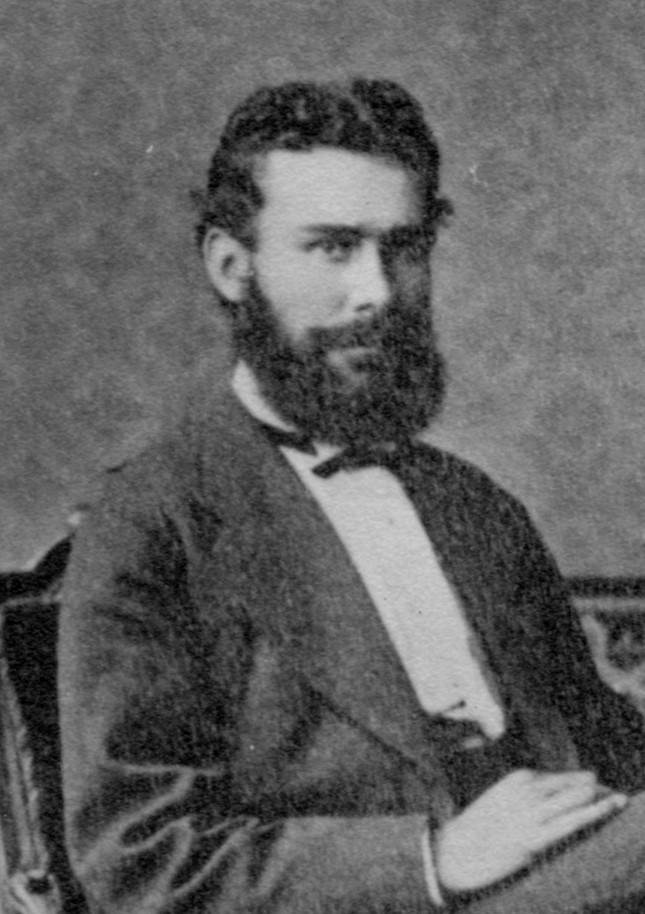
Kesällä 1871 Verlaan saapui nuorimies Hugo Neuman, vajaan vuoden työkokemuksella. Aiemmin hän oli opiskellut teknistä alaa Vaasassa ja Zürichissä. Helmikuussa 1872 hän perusti Verlan ensimmäisen puuhiomon Verla fabriksbolag tehdasyhtiön, kolmen muun yhtiömiehen kanssa: Verlan koskiosuuden tehdasyhtiölle hankki vapaaherra, siviili-insinööri Reinhold Munck, lisäksi osakkaana oli merikapteeni Johan Jacob Conradi ja Verlan tehdasyhtiön päärahoittaja tehtailija Olof Alfred Sjöberg. Conradin poika Valdemar toimi Verlan kirjanpitäjänä ja hän oli Neumanin ja Sjöbergin opiskelutoveri. Perustajajäsenistä Hugo Neuman oli se, joka asettui Verlaan pyörittämään puuhiomoa.
Hugo Neuman syntyi Oulussa 17.2.1847. Isä oli merikapteeni Lars Neuman ja äiti Kaisa Sofia Wacklin. Lars Neuman kuoli Gibraltarilla 10.3. 1852 koleraan. Äiti Kaisa jäi yksin huolehtimaan 5-vuotiaasta Hugosta ja tämän 7-vuotiaasta veljestä Frans Johanista.
Hugo kävi alkeiskoulun Oulussa ja lähti hakemaan lisäoppia Vaasan teknilliseen reaalikouluun syksyllä 1862. Samalla luokalla olivat lasitehtailijan poika Alfred Sjöberg Pirttikylästä ja Valdemar Conradi Turusta. Valdemarin isä Johan Jacob Conradi oli moninkertainen Alaskan purjehtija ja Kap Hornin kiertäjä.
Hugo sai päästötodistuksen Vaasasta hyvillä arvosanoilla kesäkuussa 1865. Hän päätti jatkaa opintojaan Zürichin polyteknisessä instituutissa, koska Suomessa ei vielä vastaavaa opetusta ollut. Siellä hän suoritti esikurssin lukukaudella 1865-66 ja sen jälkeen opiskeli mekaanisella II-osastolla kolme vuotta erinomaisin arvosanoin. Vähän ennen valmistumistaan tammikuun lopulla 1870 Hugo ilmoitti lähtevänsä Suomeen. Kuukautta myöhemmin hän oli jo Helsingissä ja aloitti huhtikuussa insinöörinä Riihimäki-Pietari ratatyömaalla, Viipurin länsipuolella. Radan valmistumisen jälkeen hän työskenteli neljä kuukautta Pietarissa Putilovin tehtaiden teknisessä toimistossa. Syyskuussa 1870 vihittiin rautatie Helsingistä Pietariin ja Suomi oli vihdoinkin yhdistetty Eurooppaan, kuten lehdet uutisoivat. Radan lähellä olevat Kymijoen kosket vallattiin muutamassa kuukaudessa saman vuoden lopulla.
Siviili-insinööri, vapaaherra Reinhold Munck huomasi Verlassa valtaamatta olevan kosken ja tullimyllyn, jonka omistivat Paavolan veljekset. Toukokuussa 1871 hän osti heiltä myllyn 5.000 markalla. Kauppaan kuuluivat myös talo, tontti ja perunamaat sekä irtain. Todennäköisesti asiasta oli neuvoteltu Hugo Neumanin kanssa, sillä heinäkuussa hän siirsi kirjansa Oulusta Iittiin, Jaalan kylään.
Muutettuaan kirjansa Verlaan, Hugo palasi takaisin Sveitsiin. Hän meni siellä elokuussa naimisiin Johanna Rahnin kanssa, ja tuli 17-vuotiaan vaimonsa kanssa Verlaan syyskuussa. Hugo jatkoi tehtaan suunnittelua ja oli yhteydessä kanavainsinööri Höökin kanssa. Alkuvuodesta 1872 olivat suunnitelmat valmiit ja helmikuussa perustettiin Turussa Verlan ensimmäinen tehdasyhtiö, jossa Hugon lisäksi yhtiömiehinä olivat varakas Vaasan opiskelutoveri Alfred Sjöberg, kofferikapteeni J. J. Conradi ja vapaaherra Reinhold Munck, joka oli ostanut Verlan tullimyllyn.
Syksyllä 1872 Verlan ensimmäinen tehdas sai senaatilta luvan aloittaa toimintansa. Lokakuussa syntyi Hugon ja Johannan ensimmäinen tytär Johanna Louise Vilhelmina, joka kastettiin Helsingissä. Tyttären 12 kummin joukossa olivat äiti Johannan omaiset ja läheiset Sveitsistä. Verlan yhtiömiehistä kummeina olivat Reinhold Munck ja Alfred Sjöberg äitinsä kanssa. Myös J.J. Conradin poika Valdemar ja tytär Matilda olivat kummeina, samoin isä Hugon lähiomaiset. Hugo Neuman perheineen oli nyt Verlassa ja merkitty kirkonkirjoihin nimekkeen Verla Fabrik alle. Lokakuussa 1872 näytti tulevaisuus lupaavalta Hugon perheen ja uuden tehtaan toiminnan kannalta.
Verlan ensimmäistä tehdasta koettelivat monenlaiset vastoinkäymiset. Huhtikuussa 1874 Hugo Neumanille tarjoutui tilaisuus lähteä toimistoinsinööriksi Hämeenlinna-Tampere-Turku rautatietyömaalle. Hugo tarttui mahdollisuuteen päästä nauttimaan säännöllistä vuosipalkkaa. Hän jätti tehtaan Hannoverissa opiskelleen insinööri Valdemar Conradin hoidettavaksi. Kuukautta myöhemmin, keskiviikkona 6. päivä toukokuuta ensimmäinen tehdas paloi. Palanut tehdas oli vakuutettu venäläisessä palovakuutusyhtiössä. Jäljelle jäi tullimylly, koskitontti ja turbiini. Tehdasyhtiön yhtiömiehet saivat uutta mietittävää.
Civil engineer Hugo Alexander Neuman (1847-1906) and co. founded Verla's first groundwood mill in 1872.
In the summer of 1871, a young man Hugo Neuman arrived in Verla, with less than a year's work experience. Previously, he had studied technology in Vaasa and Zurich. In February 1872, he founded Verla's first groundwood mill, the Verla fabriksbolag factory company, with three other partners: the Verla rapids share for the factory company was acquired by Baron, civil engineer Reinhold Munck, in addition to which the sea captain Johan Jacob Conradi and the main financier of the Verla factory company were the industrialist Olof Alfred Sjöberg. Conrad's son Valdemar worked as Verla's accountant and he was a fellow student of Neuman and Sjöberg. Of the founding members, Hugo Neuman was the one who settled in Verla to run the groundwood mill.
Hugo Neuman was born in Oulu on 17 February 1847. His father was sea captain Lars Neuman and his mother Kaisa Sofia Wacklin. Lars Neuman died in Gibraltar on 10 March 1852 of cholera. Mother Kaisa was left alone to take care of 5-year-old Hugo and his 7-year-old brother Frans Johan.
Hugo went to elementary school in Oulu and went to the Vaasa Technical School in the autumn of 1862 to study further. In the same class were Alfred Sjöberg, the son of a glass manufacturer from Pirttikylä, and Valdemar Conradi from Turku. Valdemar's father, Johan Jacob Conradi, was a multiple Alaskan sailor and a Cape Horn sailor.
Hugo received a certificate of graduation from Vaasa with good grades in June 1865. He decided to continue his studies at the Polytechnic Institute in Zurich, as there was no similar education in Finland yet. There he completed a preliminary course in the semester of 1865-66 and then studied in the mechanical II department for three years with excellent grades. Shortly before his graduation at the end of January 1870, Hugo announced that he was leaving for Finland. A month later, he was already in Helsinki and started as an engineer at the Riihimäki-St. Petersburg railway construction site, west of Vyborg, in April. After the completion of the track, he worked for four months in St. Petersburg in the technical bureau of the Putilov factories. In September 1870, the railway from Helsinki to St. Petersburg was inaugurated, and Finland was finally connected to Europe, as the newspapers reported. The rapids of the Kymijoki River near the railway were conquered in a few months at the end of the same year.
Baron Reinhold Munck, a civil engineer, noticed an uncaptured rapids and customs mill in Verla, which were owned by the Paavola brothers. In May 1871, he bought the mill from them for 5,000 marks. The sale also included a house, a plot of land, potato fields and movable property. It is likely that the matter had been negotiated with Hugo Neuman, as in July he moved his book from Oulu to Iitti, to the village of Jaala.
After moving his book to Verla, Hugo returned to Switzerland. He married Johanna Rahn there in August, and came to Verla with his 17-year-old wife in September. Hugo continued the design of the factory and was in contact with the canal engineer Höök. At the beginning of 1872, the plans were ready, and in February, Verla's first factory company was founded in Turku, where, in addition to Hugo, the partners were Alfred Sjöberg, a wealthy fellow student from Vaasa, J. J. Conradi, a captain of a suitcase, and Baron Reinhold Munck, who had bought the Verla customs mill.
In the autumn of 1872, Verla's first factory received permission from the Senate to start operating. In October, Hugo and Johanna's first daughter, Johanna Louise Vilhelmina, was born, who was baptised in Helsinki. Among the daughter's 12 godparents were mother Johanna's relatives and loved ones from Switzerland. Verla's partners were Reinhold Munck and Alfred Sjöberg with their mother as godparents. J.J. Conrad's son Valdemar and daughter Matilda were also godparents, as were his father Hugo's close relatives. Hugo Neuman and his family were now in Verla and entered in the parish registers under the title Verla Fabrik. In October 1872, the future looked promising for the Hugo family and the operation of the new factory.
Verla's first factory was hit by many kinds of setbacks. In April 1874, Hugo Neuman was offered the opportunity to work as an office engineer at the Hämeenlinna-Tampere-Turku railway construction site. Hugo seized the opportunity to enjoy a regular annual salary. He left the factory in the hands of Valdemar Conrad, an engineer who had studied in Hanover. A month later, on Wednesday 6 May, the first factory burned down. The burnt factory was insured with a Russian fire insurance company. What remained was a customs mill, a rapids plot and a turbine. The partners of the factory company were given new things to think about.
Teksti poimittu teoksesta Hannu Pukkila, Werlan tehdasyhtiöt, 2022
Text from Hannu Pukkila, Werlan tehdasyhtiön (Werla Mill Companies), 2022